WHERE DARKNESS STILL HAS ROOM
More than eighty percent of the global population lives under light-polluted skies, and in North America and Europe, nearly ninety-nine percent cannot step outside and view the arch of our own home galaxy. True natural darkness has become one of the rarest ecological landscapes on Earth.
Protected dark-sky places exist to keep that window open. Certified through rigorous lighting ordinances and ongoing photometric monitoring, these parks offer unobstructed views down to the mathematical horizon.
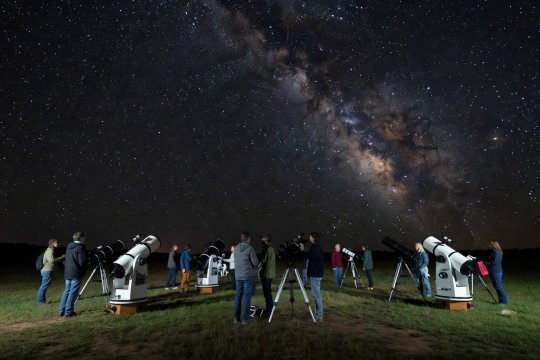
CHERRY SPRINGS & THE COLORADO PLATEAU
Perched high on an Allegheny Plateau ridge in Pennsylvania, Cherry Springs State Park is an East Coast anomaly: a Bortle Class 2 haven surrounded by hundreds of thousands of acres of state forest land. Its Astronomy Observation Field features buried electrical conduits, strict red-light shields, and a 360-degree clear horizon.
Further west, the Colorado Plateau contains the densest concentration of certified dark-sky parks on the continent, including Natural Bridges National Monument, Great Sand Dunes, and Bryce Canyon, where high altitude (often above 7,000 feet) strips away moisture and air turbulence for crystalline transparency.
Preparing your eyes for Bortle 2 skies →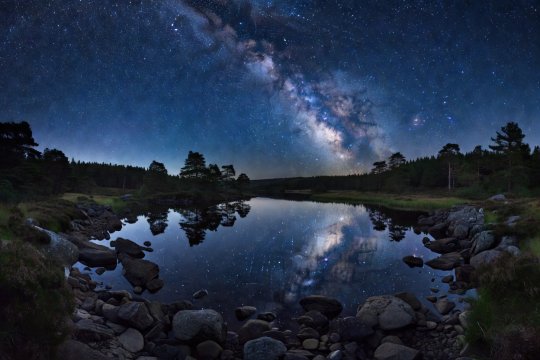
GALLOWAY FOREST & THE CANARY ISLANDS
In Scotland, Galloway Forest Park was the first dark-sky park established in the UK. Across 300 square miles of rolling moorland and lochs, light pollution drops to near-zero levels. In winter months, observers frequently combine deep-sky viewing with displays of the Aurora Borealis.
For sheer atmospheric stability, nothing in Europe matches the volcanic peaks of La Palma (Roque de los Muchachos) and Tenerife (Teide National Park) in the Canary Islands. Sitting above trade wind thermal inversions at 2,400 meters, these summits host major professional astrophysics observatories alongside public amateur stargazing zones.
CURATED DARK-SKY FIELD MATRIX
Essential field data for planning your next dedicated night-sky expedition.
| Destination / Reserve | Region / Country | Bortle Rating | Best Season | Key Sky Features |
|---|---|---|---|---|
| Cherry Springs State Park | Pennsylvania, USA | Class 2 | May – October | Milky Way core, Sagittarius star clouds, Messier clusters. |
| Natural Bridges National Mon. | Utah, USA | Class 1–2 | April – October | Owings bridge natural rock frame, zodiacal light, airglow. |
| Galloway Forest Dark Sky Park | Scotland, UK | Class 2–3 | October – March | Long winter observing windows, Andromeda, occasional aurora. |
| Pic du Midi Dark Sky Reserve | Pyrenees, France | Class 1–2 | September – November | High-altitude mountain transparency, exceptional lunar contrast. |
| Atacama Desert (San Pedro) | Antofagasta, Chile | Class 1 | Year-round | Magellanic Clouds, Carina Nebula, Southern Cross, coal sack dark nebula. |
| Aoraki Mackenzie Reserve | South Island, New Zealand | Class 1–2 | March – September | Pristine Southern Hemisphere deep sky, Antarctic auroras. |
FIELD ETIQUETTE FOR NIGHT-SKY SITES
When you enter an active observing meadow, a single careless burst of white light from a car headlight, phone screen, or flashlight destroys thirty minutes of biological dark adaptation for dozens of fellow astronomers.
The Five Non-Negotiable Field Rules
- Strict Red Light Only: Use low-intensity red LEDs. Red light triggers minimal rod photopigment bleaching.
- Shield Vehicle Lamps: Pull lighting fuses or tape red cellophane/cardboard over interior dome lights and trunk triggers before dusk.
- Arrive Before Sunset: Set up heavy tripods, level tables, and run power cables while daylight remains.
- Keep Green Lasers Sparingly Used: Green alignment lasers ruin long-exposure camera sensors on the same field.
- Pack Out All Gear and Waste: Preserve fragile alpine soils and desert cryptobiotic crusts around designated pads.